Although awareness of neurodiversity is growing rapidly among younger generations, significant gaps in understanding remain – particularly among those raised with dated models of diagnosis and behaviour. For many older individuals, understanding of neurodiversity is filtered through decades of stigma, misinformation, and cultural silence. Indeed, although we’ve come a long way since Judy Singer coined the term in 1998, we’re still far from true equality and respect for the neurodivergent community.
If we are to create a world that recognises, accepts and cares for its neurodivergent members, we need to defy these old-fashioned ideas. We need to challenge older individuals to listen to the stories and experiences of the neurodivergent community. We need accurate representations in media. Overall, we need to show that neurodiversity isn’t about following a trend – it’s about recognising and honouring who you truly are.
A Brief History of Neurodiversity
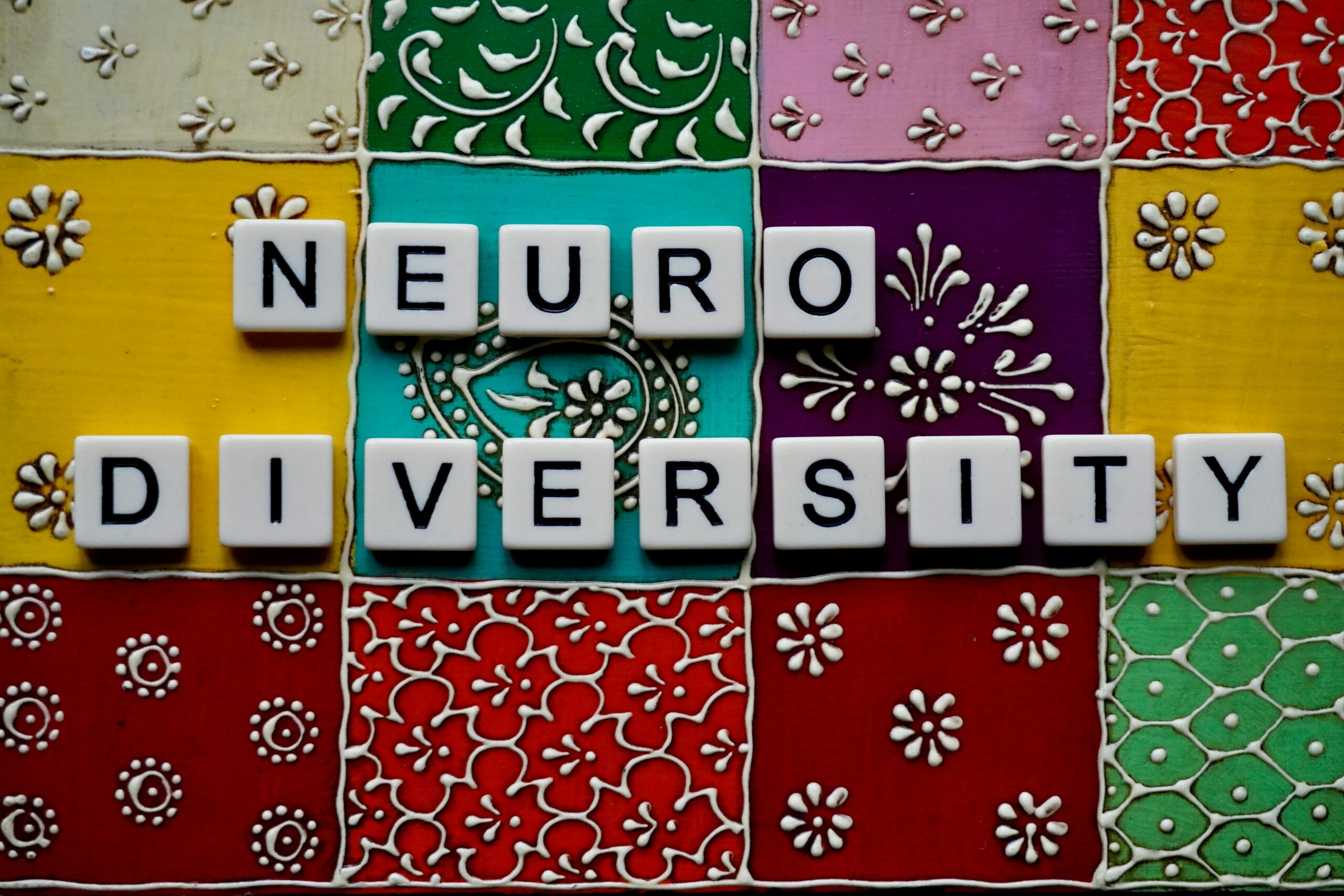
The term neurodiversity was coined in 1998 by sociologist Judy Singer. She first mentioned it in a paper titled ‘Odd People In: The Birth of Community amongst people on the “Autistic Spectrum”’. Of course, nowadays, we recognise neurodiversity as including far more than just autism. Neurodiversity also includes ADHD, dyslexia, dyspraxia, Tourette’s syndrome, as well as many other neurological differences. Singer’s ideas, however, remain relevant. Indeed, with the term ‘neurodivergent’ gaining a place in our everyday vocabulary, it’s imperative we understand its origin. We must acknowledge the history of neurodiversity, the progress that has been made, and the steps that still need to be taken.
Singer’s 1998 paper highlighted the social movement that had unfolded within the autistic and disabled community. Indeed, Singer herself said later that, for her, “the significance of the ‘Autistic Spectrum’ lies in its call for and anticipation of a ‘Politics of Neurodiversity’. The ‘Neurologically Different’ represent a new addition to the familiar political categories of class/gender/race and will augment the insights of the Social Model of Disability.”
Neurodiversity, therefore, is more than just an overarching term for conditions like autism and ADHD. It is a description of the community of people with neurological differences. It is an articulation of the fight for equality. For recognition. For acceptance.
Modern Neurodiversity
Since the publication of Singer’s paper, the concept of neurodiversity has become more and more widespread. In fact, there is even now a Neurodiversity Celebration week. This is held from the 17th to the 23rd of March and is a global initiative that focuses on celebrating and recognising the different ways people’s brains work. It aims to challenge misconceptions and stereotypes about neurodiversity. It also promotes an inclusive and understanding environment.
The surge in public awareness of neurodiversity has also led to a dramatic rise in people seeking formal diagnoses – and rightly so. But while this is a positive sign of progress, the NHS are alarmingly unprepared. There simply isn’t enough government funding to get through everyone. With estimates from The Happiness Index suggesting 15-40% of people could be neurodivergent, we’re talking about millions of people – yet the system is failing them. In some places, the average wait for an autism diagnosis now exceeds two and a half years. Some people are waiting even longer. This is not just a delay; it’s a denial of access to essential support and legal protections. People are being left in limbo, their lives stalled, simply because the system cannot keep up.
But if it’s such a big problem, why isn’t the government putting more money into diagnosis services?
Well, the generational divides turns up here again. Many of the people working in the government are older. They may be victim to old-fashioned ideas about neurodiversity. So, not only would decreasing the generational gaps in understanding benefit neurodivergent people in their everyday lives, but it may also help to release the funding needed to diagnose the millions of people who are still waiting for support.
The Old-Fashioned Picture
Old ideas tend to come together to form a very limited picture of what neurodiversity means. Often, it only refers to autism. ADHD is just another word for badly-behaved. People with dyslexia just need to try harder. Dyspraxia is a fancy word for clumsy.
Autism is also limited. Only boys who are obsessed with trains, nonverbal, and stim by rocking can be autistic, right?
Wrong. But this is the picture older generations have had engraved into their minds. And it’s not their fault: many of them would have grown up with these ideas. Neurodiversity was almost always swept under the rug. Older generations were brought up with the ethos that you must work every hour to better yourself. Adjustments were never made. ‘Weakness’ was simply not permitted. Personal life and professional life remained firmly distinct. You didn’t bring your entire self anywhere. So, if you experienced brain-fog or were easily distracted by noise around you, that was your problem to deal with. You were just expected to get the job done.
Luckily, these limiting ideas are fading. It no longer seems so important that our private lives and work lives stay apart. In fact, many workplaces now encourage people to bring their whole selves with them. There are reasonable adjustments made for those who need them, and it has overall been recognised that the old ideas are incredibly harmful.
But although these ideas are slowly fading away, parts of them still remain. And though they are most prevalent in older generations, they are not confined to them. In fact, most of these ideas remained popular until only recently. Thus, they continue to have some unfortunate lingering consequences.
Autism in Girls
For example, people only recently recognised that girls could be autistic. Because autism generally presents differently in girls, early researchers originally believed it only affected boys. Though we now know this to be false, the fact that they do not show stereotypical traits means that autistic girls continue to go unnoticed to this day.
Another reason why autistic girls are overlooked is because they are often better at masking. This is when an autistic person hides their autistic traits to present as neurotypical. Autistic people may learn to mask as a way of attempting to fit in, to make friends, or to appear ‘normal’. But it can be incredibly debilitating for people with autism to mask, leading to overwhelm, anxiety and low self-esteem. Thus, autistic girls are often misdiagnosed with anxiety.
Gender stereotypes also play a role here. Society often stereotypes girls as being naturally quiet and shy, so it interprets behaviours like reading alone or twirling their hair as typical rather than potentially significant. Additionally, autistic girls may have friends or excel academically, which can mask or overshadow signs of autism. Old-fashioned assumptions about autism mean many girls may go undiagnosed, receive a diagnosis far too late, or be misdiagnosed with conditions other than autism. This bars autistic women from accessing the support and recognition they need to understand themselves.
It also means that older generations can struggle to understand autistic women. They might question the legitimacy of the diagnosis. They might even find the diagnosis hard to believe, especially if it comes late in life. And it’s understandable, really. If you’ve spent your whole life thinking that only men can be autistic, it is a struggle to understand autistic women. Thus, the stereotypes about who can and cannot be autistic still feed the generational gaps in understanding neurodiversity.
Neurodivergent Characters
One positive step forward, however, is the representation of neurodiversity in TV and books. Neurodivergent characters provide neurodivergent individuals with someone to identify with – a hero just like them. These characters are also an incredibly important tool for decreasing the generational gaps in understanding neurodiversity. They allow older generations to attach themselves to and empathise with neurodivergent people. This increases their understanding and challenges old-fashioned ideas.
But despite their potential for defeating stereotypes, neurodivergent characters are often stereotyped themselves. For example, though there are female neurodivergent characters, most are men. Even male neurodivergent characters are often stereotypes. How many male autistic characters just so happen to also be genii? Think Sheldon Cooper. Dr Shaun Murphy. Raymond Babbitt. Savant syndrome is prevalent in 10% of the autistic population, and yet 10 out of 10 of autistic characters seem to also be savants.
Neurodivergent characters also seem to make more appearances in media for younger viewers. But 54% of Gen Z identify as neurodivergent. They are by far the most accepting of neurodiversity already. Thus, these characters don’t have any effect on the generational gaps. Sure, they’re still incredibly important. Like I said, these characters are heroes for young neurodivergent people. But their influence should also spread into media made for older generations. Neurodivergent characters need to turn up evenly across TV and books – not just in media made for Gen Z.
So, while representing neurodiversity is incredibly important, it’s equally crucial to avoid reinforcing stereotypes when creating neurodivergent characters. And these characters shouldn’t exist solely as role models for neurodivergent Gen Z viewers – they should also help to bridge the generational gaps in understanding neurodiversity.
Social Media and Neurodiversity
Social media has had a significant, positive impact on how younger people understand neurodiversity. It has increased acceptance and awareness by giving young neurodivergent people a voice. But it hasn’t decreased the generational gaps in understanding. If anything, it has made things worse.
One definite positive is that people are gaining a better understanding of themselves through self-diagnosis over social media. For many, especially those facing two-year waiting lists, self-diagnosis isn’t a trend – it’s a survival strategy. Self-diagnosis can offer people the recognition they need to understand and accept themselves. It also forges a sense of community, much like what Singer was talking about when she first coined the term.
But while platforms like TikTok and Instagram have created supportive communities, they have also spread oversimplified or misleading representations of neurodiversity. After all, social media isn’t exactly renowned for being reliable. Thus, self-diagnosis may seem to threaten the legitimacy of neurodiversity.
This is further exemplified by the popularity of self-diagnosing as having AuDHD. A person may identify as having AuDHD when they believe that they have both autism and ADHD. It is not, however, a formal diagnosis. It is a term coined by social media. Again, this might seem to threaten the legitimacy of neurodivergent diagnoses in the eyes of older people, widening the generational gaps in understanding neurodiversity.
So, though social media offers community and acceptance for those who have been waiting years for formal recognition of their neurodiversity, it only widens the generational gaps in understanding.
Bridging the Gap
Overall, these factors combine to create a metaphorical canyon. The gaps between how different generations understand neurodiversity continue swallow up any hope of acceptance. Although Gen Z and other younger generations may be able to free themselves from old-fashioned ideas and stereotypes, it is a lot harder for older generations. These stereotypes are all they have ever known.
To cross the canyon, we need to build a bridge.
Building this bridge means laying down planks of empathy, education, and visibility. Every story told, stereotype challenged, and conversation held becomes a part of that structure. And this is where representation comes in – true representation. This is where we need neurodivergent characters across all of television, characters who challenge stereotypes and show that neurodiversity can be a strength instead of a weakness. This is where we need to have conversations. Where questions need to be asked. Where lived experiences need to be exchanged.
Neurodiversity is not a ‘trendy’ diagnosis. It is simply a way of acknowledging that someone has a different way of processing the world. Being neurodivergent is not what defines you – it is just one part of a brilliant whole. And by helping older people to recognise this, we can bridge the generational gaps in understanding neurodiversity.
